
Ariana, Live from the Runway: Lace, Corsets & Courtesy
Photography by Marten Moreno and Yashur Garrett
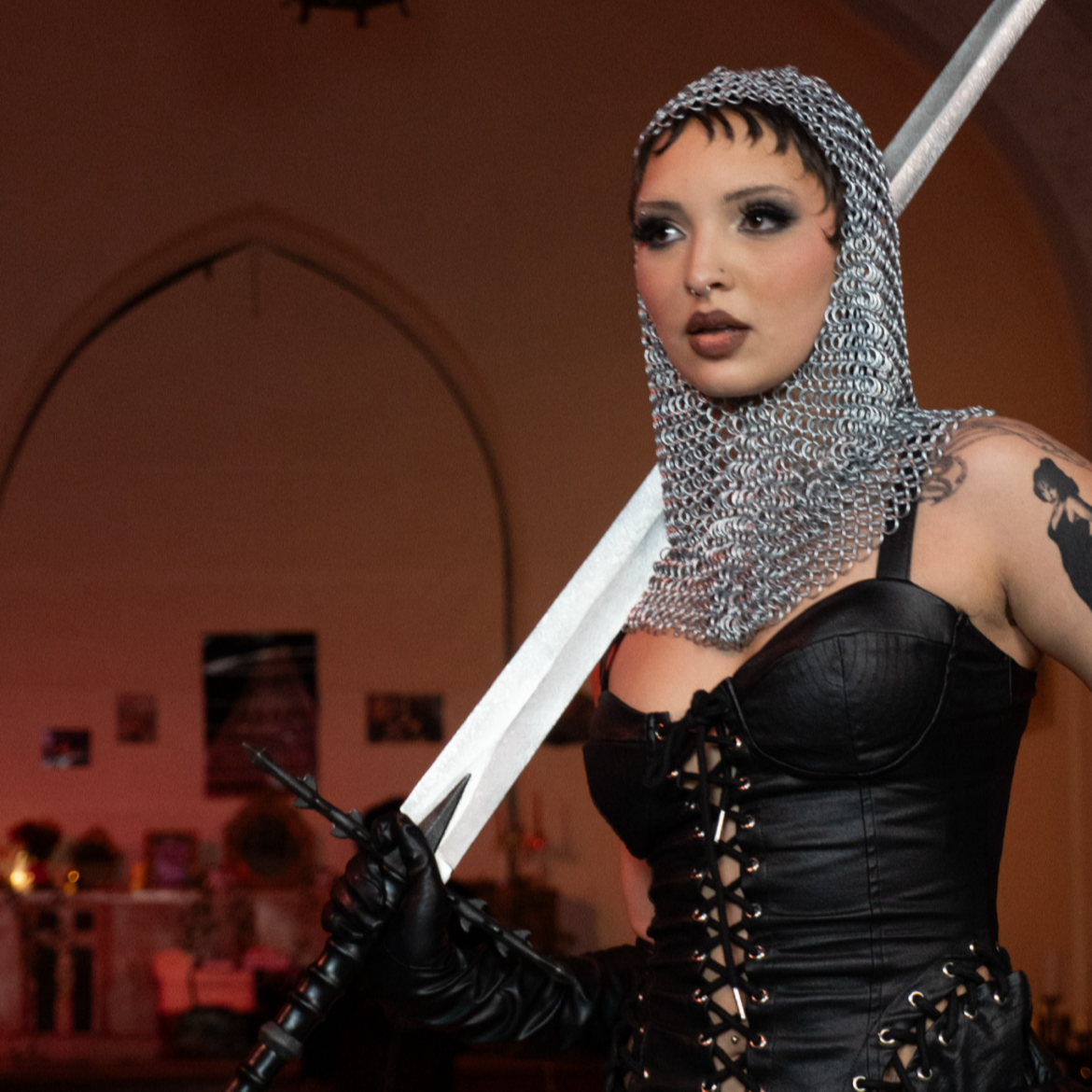
Fashion doesn’t whisper—it declares. The mood is deliberate, intelligent, and just a little subversive. After seasons of quiet luxury and algorithm-approved minimalism, the runways have erupted in texture, color, and conviction. Designers are no longer asking what we want to wear; they’re telling us who we could become.
In studios from Paris to Seoul, silhouettes are sharpening. Shoulders are architectural, waists are intentional, and fabrics feel chosen with almost obsessive care—liquid silks that skim like a second thought, leather polished to a mirror sheen, lace layered with a wink rather than a sigh. There’s a new sensuality at play, but it’s cerebral: power expressed not through excess, but through precision.
Carmilla is no exception to the era.
Staged at Chicago Danztheatre Ensemble in Andersonville, Chicago last Friday the first week of February — a neighborhood that knows a thing or two about drama. Under the creative direction of Fashion Foundry and produced by Peach Palace, Carmilla promised dark romance and desire. And darling, it delivered — with a side of theatrical sighing and enough corsetry to make Pilates nervous.
The models didn’t so much walk as they… yearned. They hovered in doorways. They touched each other’s wrists with the intensity of people who have read too much poetry. At one point I wasn’t sure if I was at a fashion show or accidentally attending someone’s very dramatic situationship.
And I couldn’t help but wonder…
When did longing become an accessory?
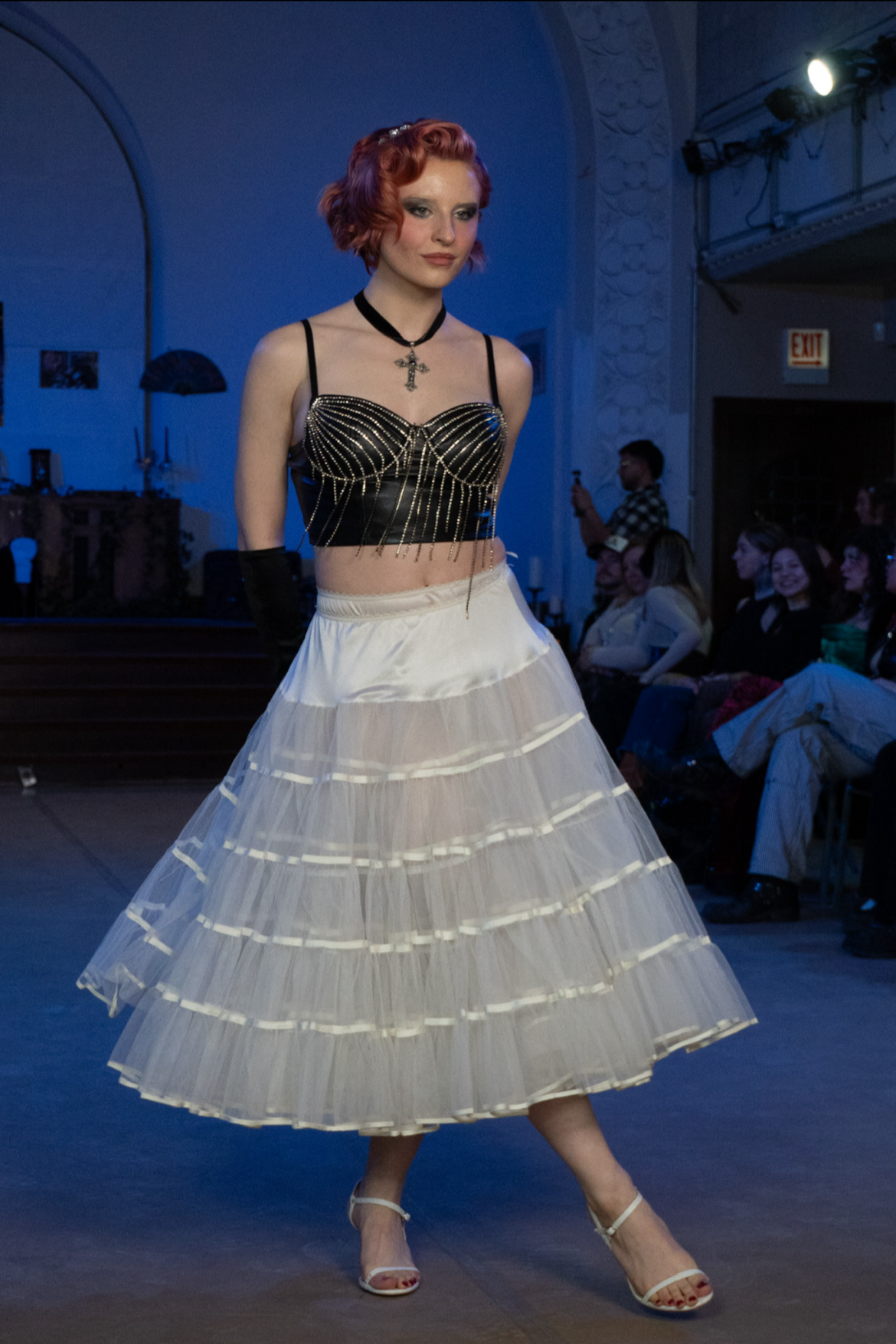
The Designers: A Study in Seduction
Three design houses shaped the narrative arc of the evening:
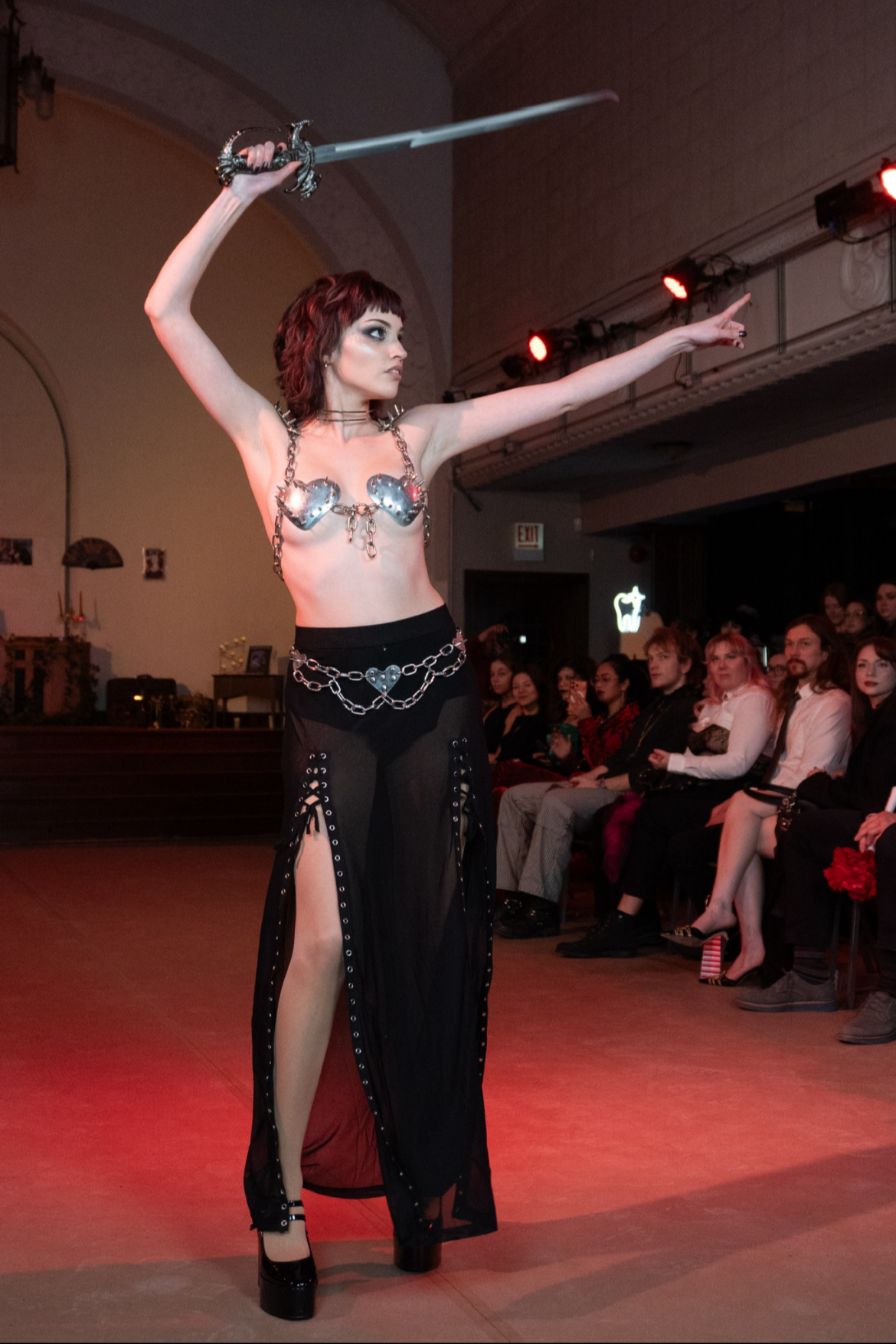
Risque Business Chicago delivered structured provocation — corsetry reimagined with architectural precision. Their silhouettes spoke in sharp lines and whispered threats. A crimson-laced bodice paired with flowing black chiffon was less garment, more promise.
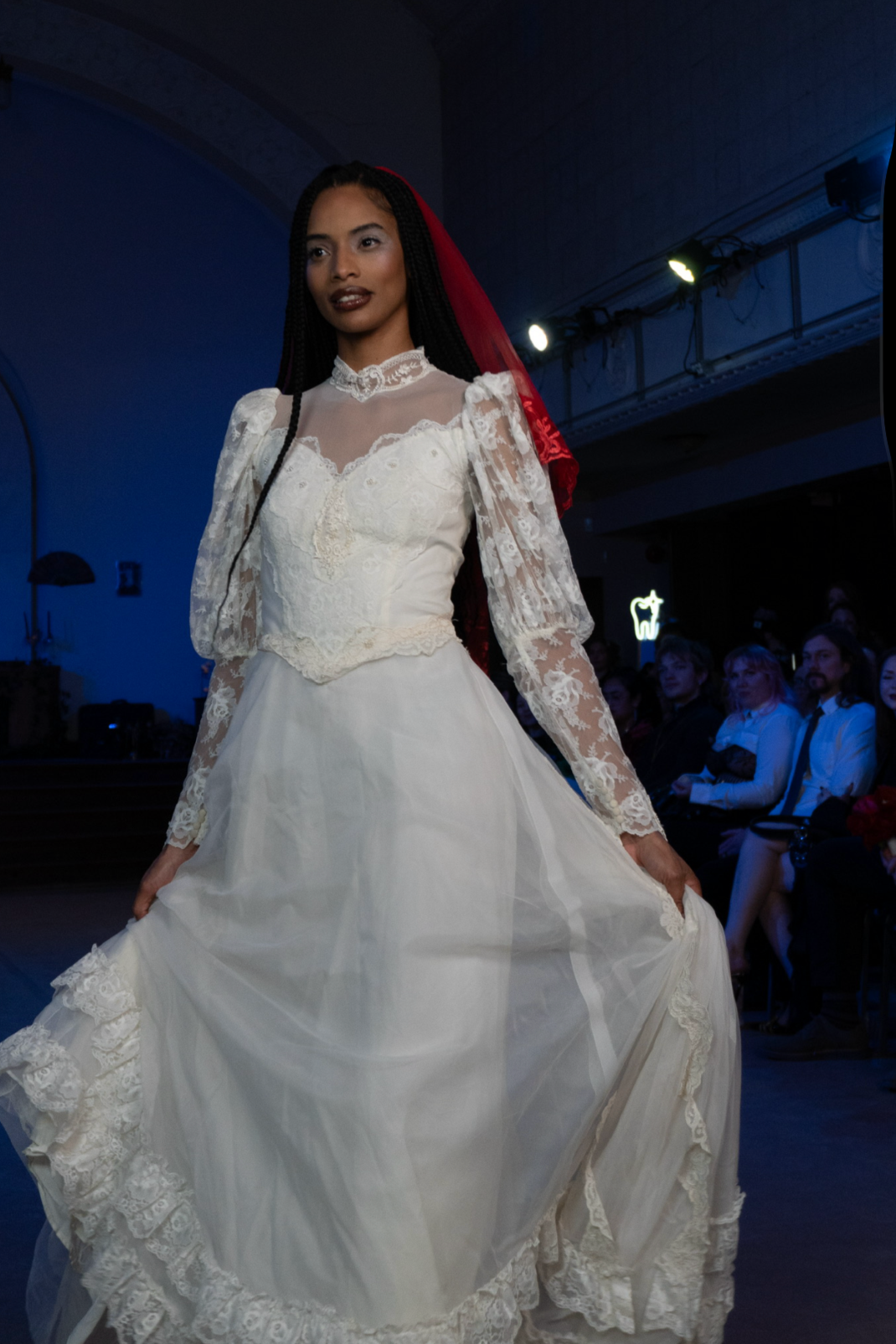
The Beaded Siren understood ornament as language. Beading cascaded like tears. Pearlescent embellishments shimmered under stage light, transforming movement into something aquatic and hypnotic. One ivory gown, dripping in crystal constellations, felt as though it had been dredged from a haunted lagoon.
Heidi’s Leather and Lace embraced tension — supple leather harnesses against delicate lace panels. There was something thrilling about the contradiction. Softness constrained. Power adorned. Romance weaponized.
And then there was the artwork — visceral, feminine, defiant — by Final Girl Outlet, punctuating the production with visual exclamation points. It grounded the fantasy in something contemporary and self-aware. A reminder that this wasn’t nostalgia. It was reclamation.
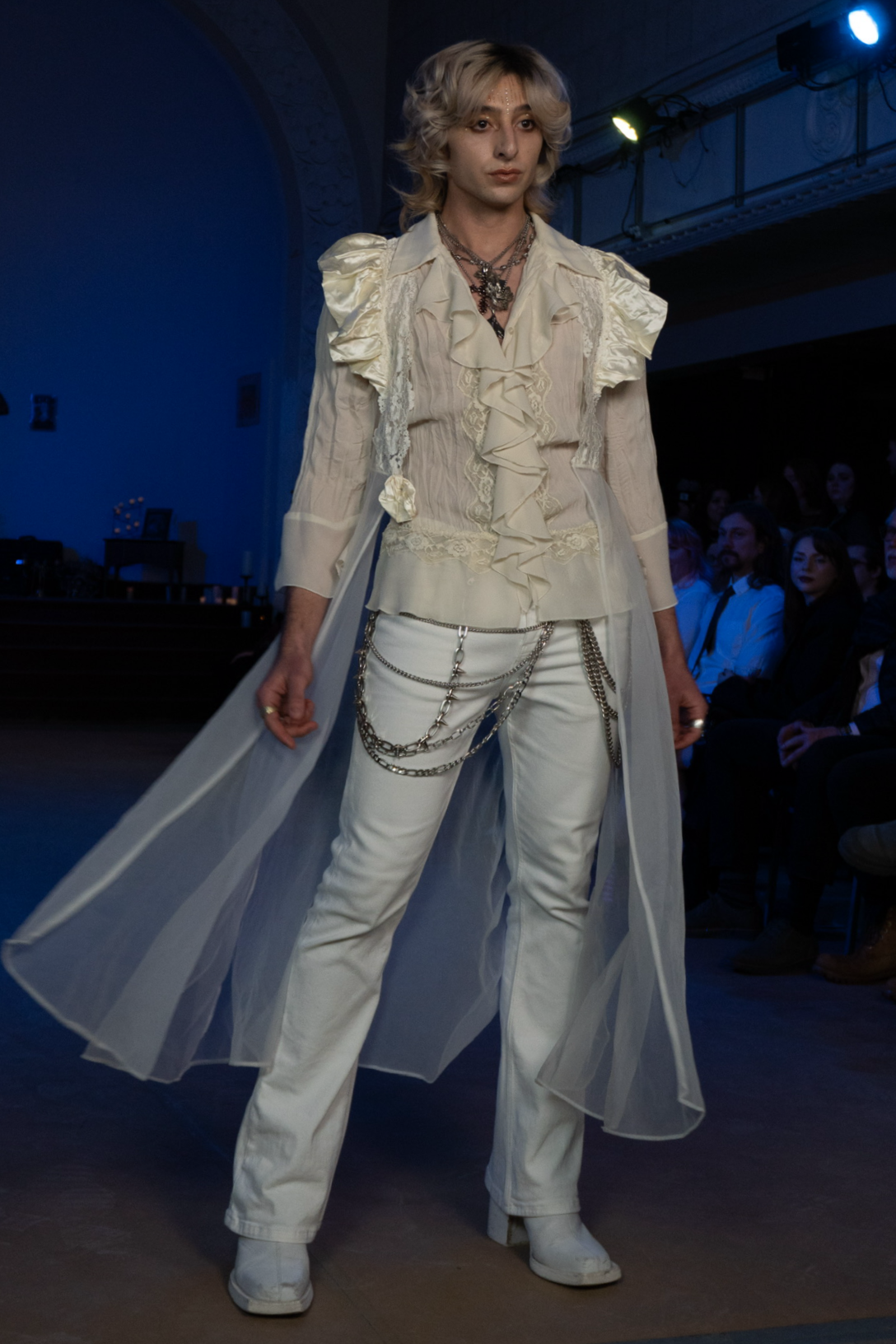
The Mood: Gothic, But Make It Modern
The genius of Carmilla lies in its refusal to be costume. Yes, there were references — the gothic heroine, the vampiric seductress, the trembling ingénue — but this was no period piece. It was modern hunger wrapped in romantic excess.
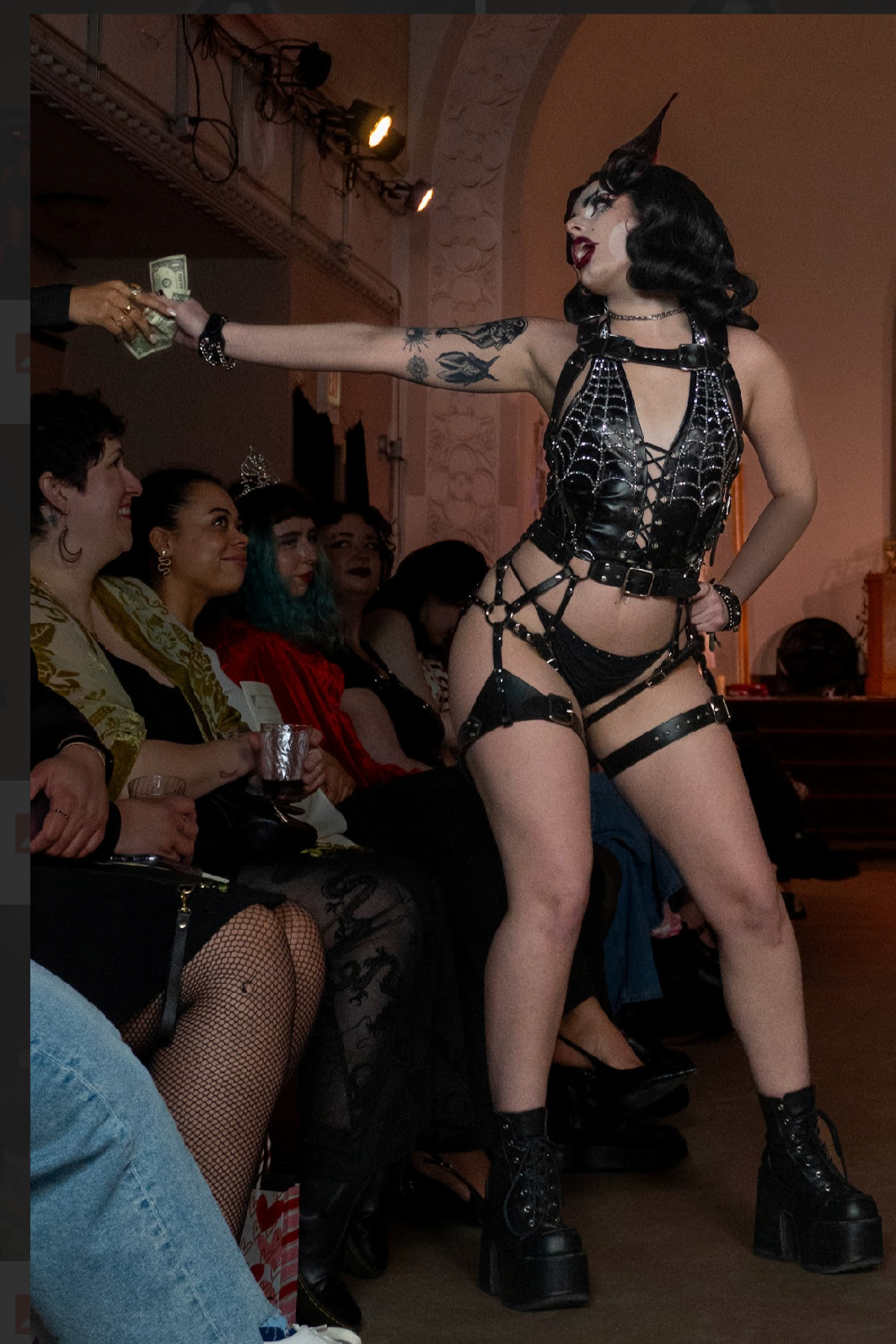
The embellishment was unapologetic. Sequins, beadwork, lace appliqué — nothing minimalist here. And yet, it never tipped into parody. The whimsy was deliberate. The romance, controlled. The darkness? Delicious.
Fashion Foundry’s vision stitched the entire production together with theatrical coherence. Each designer’s aesthetic felt distinct yet narratively entwined — like three lovers orbiting the same dangerous flame.

Romantic. Whimsical. Slightly Exhausted.
The thing about Carmilla is that it took itself very seriously — which, of course, made fashion fiends deliciously enthralled and inspired to do the same. Every glance was loaded with adoration. Every slow turn was cinematic.
The embellishment? Maximal. The mood? Moody. The desire? Practically insured.
And yet, beneath the drama, there was something undeniably charming. Chicago doesn’t forego fashion the way New York does. It does fashion the way Chicago does — with heart, with grit, with glee and occasionally with enough lace to reupholster a brickstone chateau.
And I have to admit, watching this modern tale of lust unfold inside a theatre felt oddly refreshing. No algorithm. No influencer ring lights. Just humans, fabrics, and an unapologetic commitment to yearning.
So I couldn’t help but wonder…
In a world obsessed with minimalism, is the ultimate rebellion a little melodrama?
If it is, Carmilla may have just corseted itself into the conversation, not in a whisper, but in a declaration. Not in chaos, but in clarity. Not in spectacle alone, but in intention.
What we’re left with isn’t a trend report so much as a recalibration. The return to structure, the embrace of saturated color, the insistence on craft—these are not aesthetic detours. They are signals. Signals that getting dressed is once again an act of authorship. That sensuality can be sharp. That glamour can be intelligent. That restraint and rebellion can share the same seam.
In ateliers and on avenues alike, the mood is deliberate, intelligent, and just a little subversive. The woman stepping into this new chapter isn’t asking for permission, nor is she dressing for approval. She understands the power of a line, the authority of a silhouette, the poetry of precision.
In 2026, fashion doesn’t whisper—it declares. And this time, we’re listening.
